Secure Every Prompt: Runtime AI Governance & Data Leak Protection
A public product walkthrough showing how runtime AI governance helps protect prompts, files, and sensitive data before AI workflows create exposure.
Watch on YouTube Tutelaby H2H
Tutela Data Security helps organizations find sensitive data, understand who can access it, and prepare the right protection decisions first.
Move from scattered inventory to clear evidence of where sensitive data lives, who can reach it, and which access paths need control first.
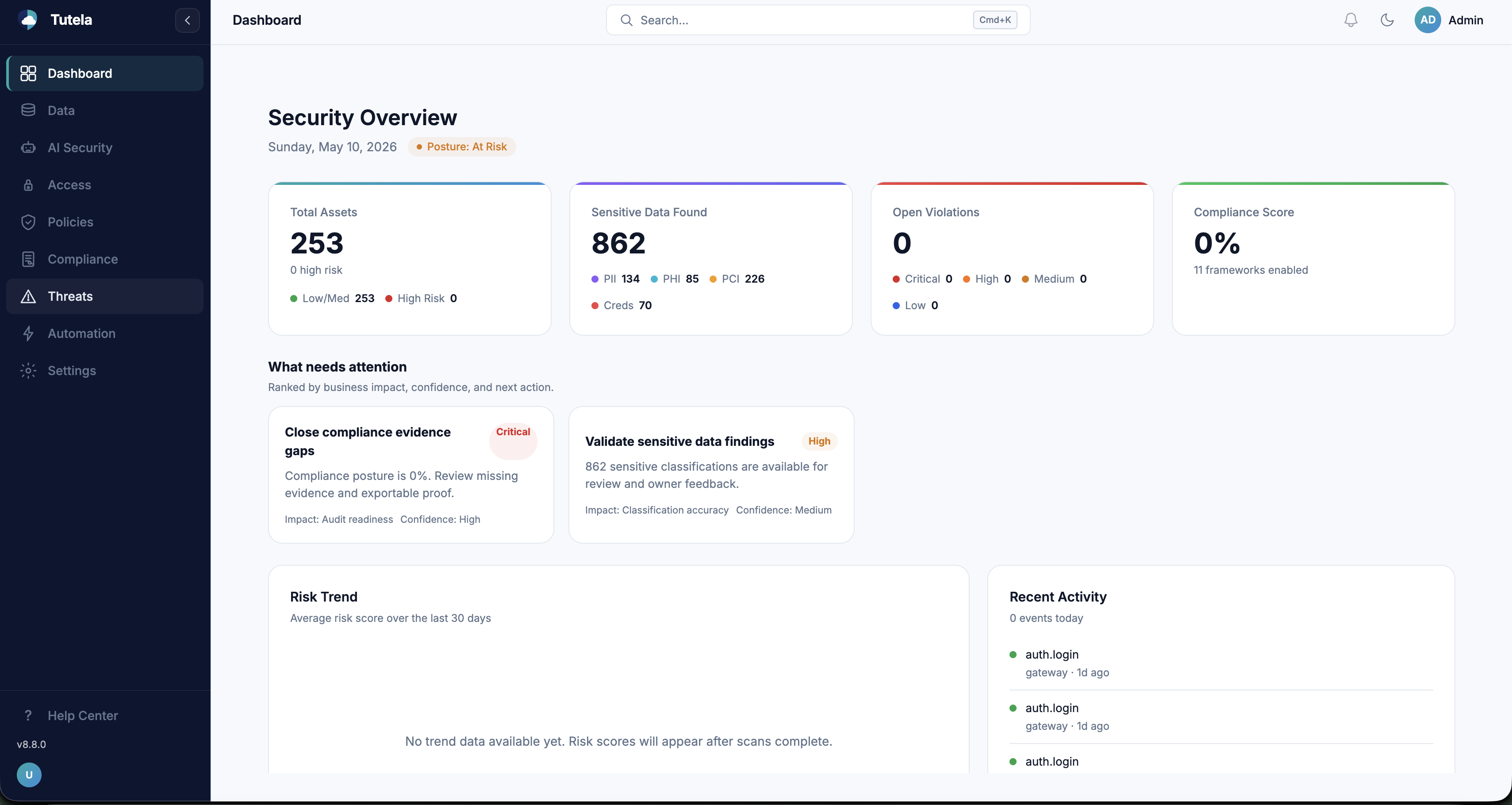
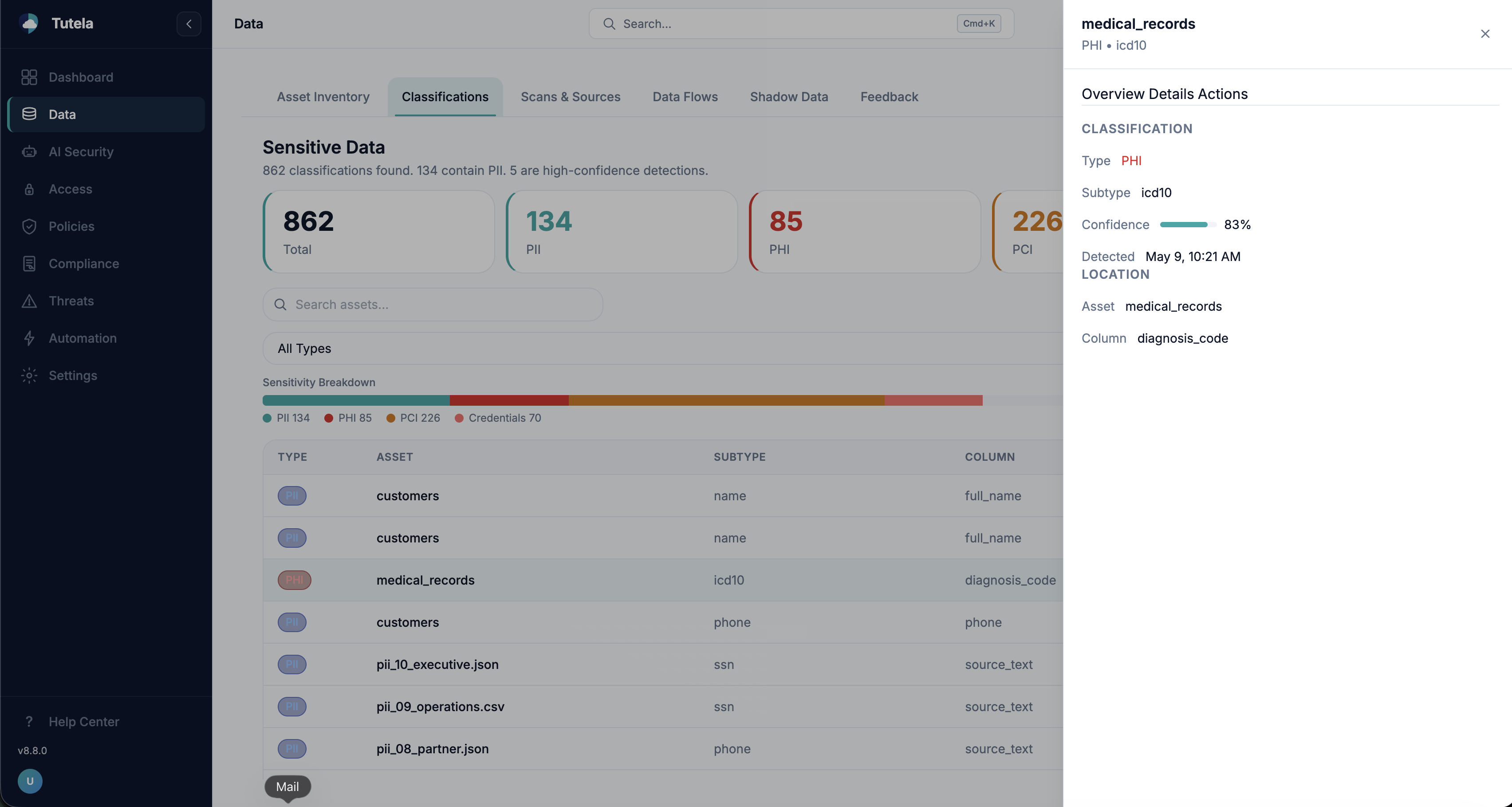
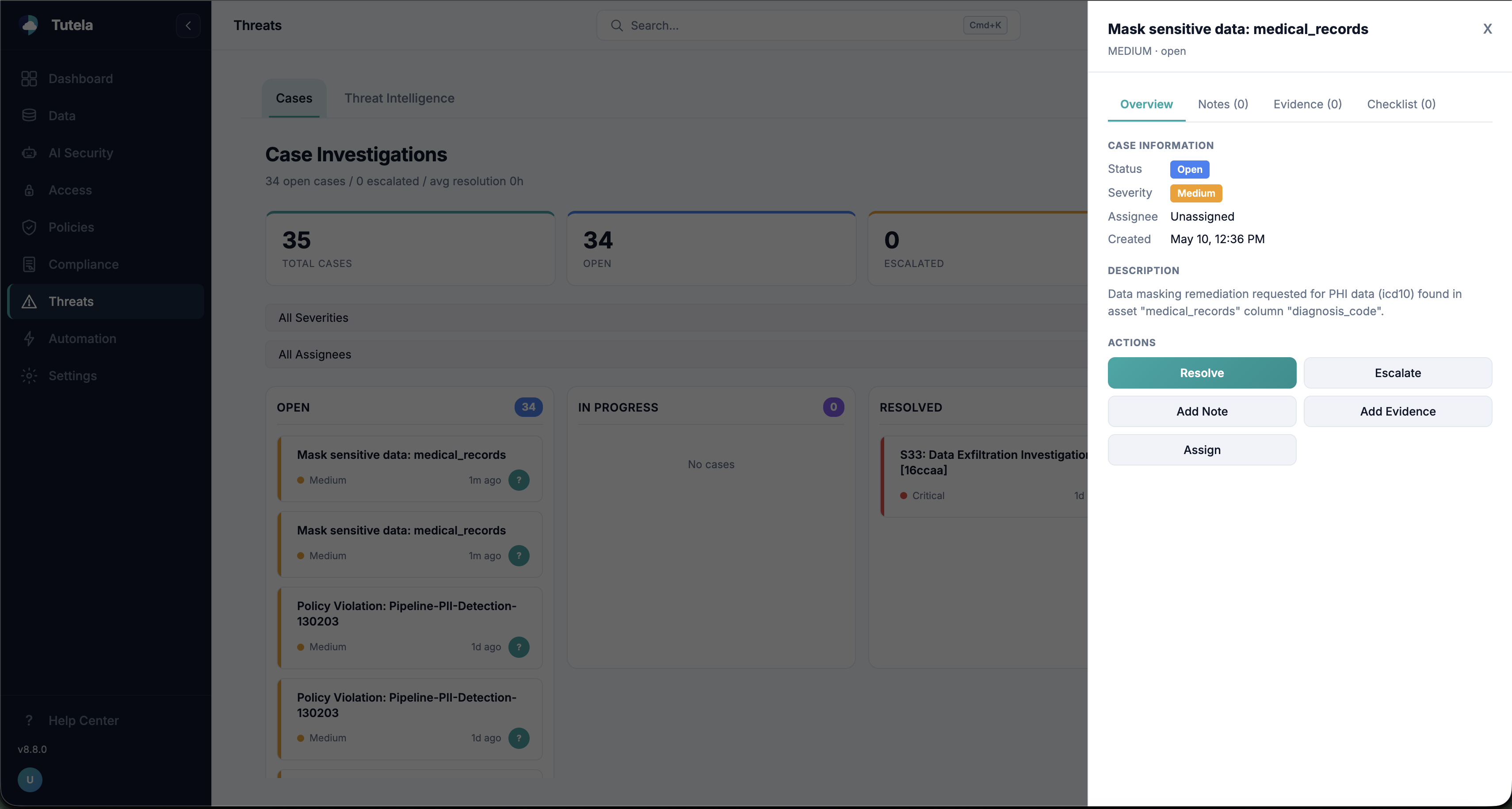
These views show how Data Security moves from discovery and classification into posture review, explainable findings, and remediation action.
A public product walkthrough showing how runtime AI governance helps protect prompts, files, and sensitive data before AI workflows create exposure.
Watch on YouTube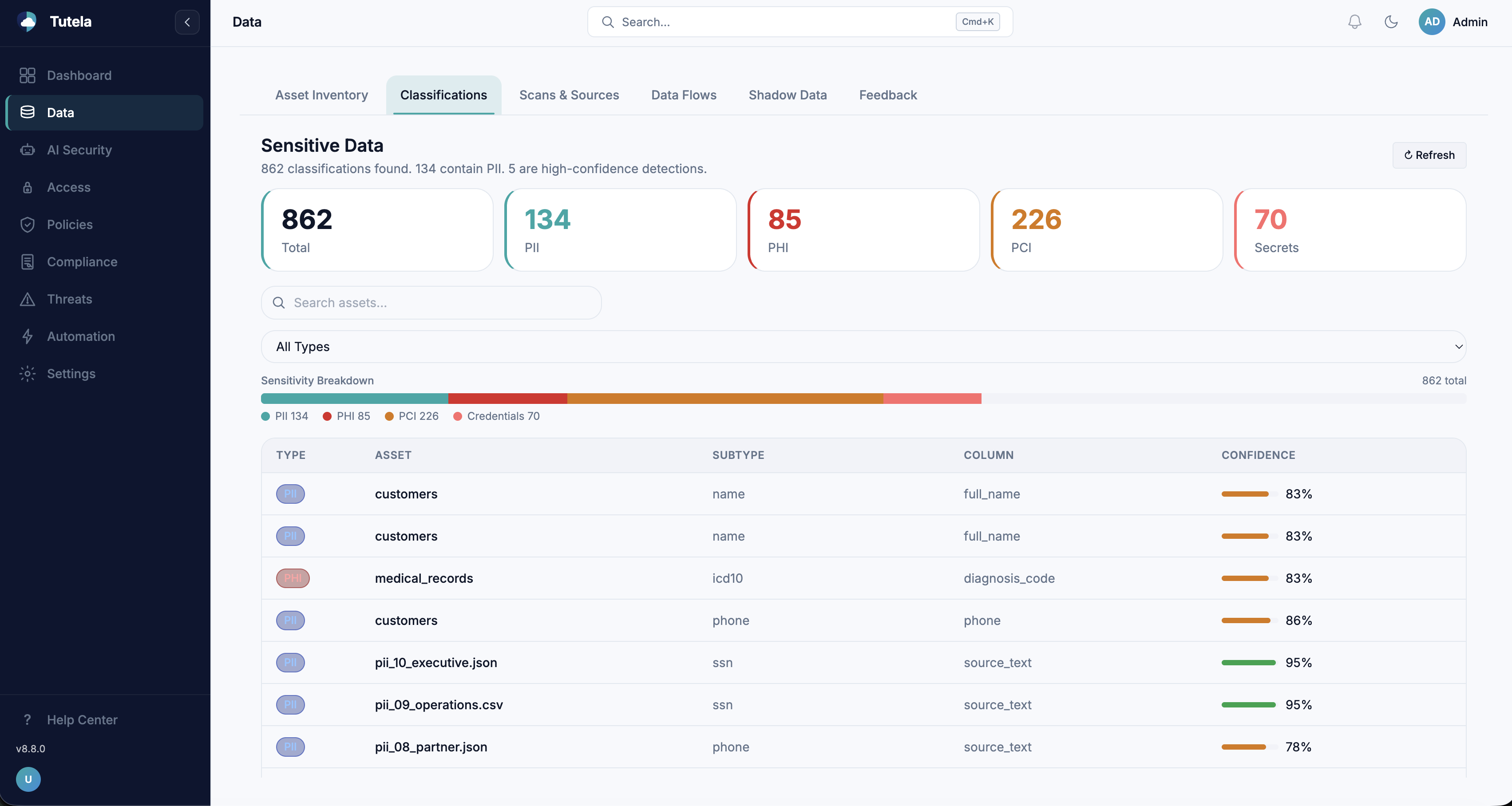
Security, data protection, compliance, cloud, and data teams that need to know what data is sensitive, where it lives, who can reach it, and what needs to be fixed first.
Organizations lose track of sensitive data as it spreads across cloud storage, applications, SaaS exports, databases, and operational workflows. The risk is the combination of data sensitivity and access, not inventory alone.
Find regulated, confidential, and business-critical data without treating every record as equal
Map who and what can access sensitive data across identities, services, roles, and application paths
Prioritize the riskiest data-access paths first with evidence for protection, tokenization, retention, and remediation
Data Security helps organizations move from scattered inventory to clear exposure decisions. You can discover and classify sensitive data, map the identities and services that can reach it, and prioritize protection actions based on actual business and compliance risk.
Find regulated, confidential, and business-critical data across cloud, SaaS, applications, and operational paths without treating everything as equal.
Know not just that data is sensitive, but why it matters, who owns it, and which policy or regulation applies.
Map identities, services, roles, and application paths to the data they can access so risk is tied to real exposure.
Move from discovery into tokenization, protection, retention, remediation, and review decisions with cleaner supporting context.
A useful DSPM workflow shows where sensitive data lives, why it matters, who can reach it, and which protection decision should come first.
Where regulated, confidential, and business-critical data exists.
Who can reach high-risk data and which access paths matter most.
Which tokenization, protection, retention, and compliance decisions need review.
Follow sensitive data from location and classification through access context and priority.
Find regulated, confidential, customer, business-critical, and secrets-adjacent data across customer-owned environments.
Separate meaningful data classes from flat inventory so review starts with what deserves attention.
Connect identities, services, teams, and application paths to the data they can reach.
Prioritize data and access combinations that create practical security, compliance, or business risk.
Prepare protection, retention, tokenization, remediation, or review decisions with clearer evidence.
Find sensitive data across cloud and application paths without moving review ownership away from the customer.
Classify business and regulatory context so data risk is not treated as a flat inventory problem.
Map access paths, permissions, exposure, and graph relationships that create practical risk.
Prepare tokenization, protection, and retention decisions around the data that matters most.
Organize review evidence security, compliance, and platform teams can use before deployment.
Tutela is designed for customer-owned deployment. The product story starts with the workflow, then uses architecture and readiness material to make adoption more trustworthy.
Designed for environments where sensitive data discovery, access context, and control planning should remain under customer ownership.
Connect cloud data paths, identity, application access, and classification context before choosing protection actions.
Use technical guides to prepare architecture, data ownership, and operating responsibilities before production use.
These are the practical questions your team should be able to take into product, architecture, security, and procurement review.
Find regulated, confidential, and business-critical data without treating every record as equal
Map who and what can access sensitive data across identities, services, roles, and application paths
Prioritize the riskiest data-access paths first with evidence for protection, tokenization, retention, and remediation
Find regulated, confidential, and business-critical data without treating every record as equal
Use these resources when your team is ready to move from public product fit into the next useful technical or planning conversation.
Platform overview for how Data Security turns discovery, classification, and access context into a more reviewable risk story.
Who should read this next: Security leaders, data owners, and platform teams orienting around the Data Security product story.
SpecsArchitecture specs for teams reviewing Data Security placement, identity assumptions, and evidence boundaries in customer-owned environments.
Who should read this next: Security architects, cloud teams, and reviewers validating where Data Security sits and what the customer team owns.
Deep DiveTechnical deep dive for practitioners who need more than top-level posture and want to inspect blast-radius logic in context.
Who should read this next: Security practitioners and architects going deeper into access paths, data relationships, and impact analysis.
It helps teams find regulated, confidential, and business-critical data across cloud, SaaS, application, database, and operational paths.
It connects sensitive-data context with identities, services, roles, and application paths so teams can focus on the risky combinations first.
Data Security prepares teams for protection, tokenization, retention, remediation, and compliance decisions by showing which data needs control and why.
Tutela products are designed for customer-owned deployment so sensitive-data review can stay under the customer's operating control.
Data Security establishes the sensitive-data map and access context that Agentic Security can use when teams govern employee AI use and AI workflow risk.
Share what your team is evaluating so we can route the product, architecture, or deployment follow-up to the right place.